
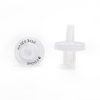
ER00517
PTFE Syringe Filter, Hydrophobic, 13 mm, 0.22 µm, Non-sterile, 100/pk
Hydrophobic PTFE, 0.22 µm, 13 mm, Non-sterile
In stock in the Czech Republic (EU), ships Tue 13 Oct
€23.45 per pack of 100 €0.23 per filter
Syringe filters for HPLC and GC sample preparation in nylon, PTFE (hydrophilic and hydrophobic), PES, PVDF and MCE, 13, 25 and 30 mm, with 0.22 and 0.45 µm pores.
Filters come in packs of 100, and quantity discounts go up to 15% from 25 packs. The 13 mm 0.22 µm hydrophobic PTFE filter is in stock in the Czech Republic (EU) and ships in 1 working day.
Hydrophobic PTFE, 0.22 µm, 13 mm, Non-sterile
In stock in the Czech Republic (EU), ships Tue 13 Oct
13 mm, 0.22 µm, Hydrophilic PTFE, Non-sterile
Lead time 3-4 weeks, ships from the Czech Republic (EU)
13 mm, 0.45 µm, Hydrophilic PTFE, Non-sterile
Lead time 3-4 weeks, ships from the Czech Republic (EU)
25 mm, 0.22 µm, Hydrophilic PTFE, Non-sterile
Lead time 3-4 weeks, ships from the Czech Republic (EU)
25 mm, 0.45 µm, Hydrophilic PTFE, Non-sterile
Lead time 3-4 weeks, ships from the Czech Republic (EU)
30 mm, 0.22 µm, Hydrophilic PTFE, Non-sterile
Lead time 3-4 weeks, ships from the Czech Republic (EU)
30 mm, 0.45 µm, Hydrophilic PTFE, Non-sterile
Lead time 3-4 weeks, ships from the Czech Republic (EU)
13 mm, 0.22 µm, Hydrophilic PVDF, Non-sterile
Lead time 3-4 weeks, ships from the Czech Republic (EU)
13 mm, 0.45 µm, Hydrophilic PVDF, Non-sterile
Lead time 3-4 weeks, ships from the Czech Republic (EU)
25 mm, 0.22 µm, Hydrophilic PVDF, Non-sterile
Lead time 3-4 weeks, ships from the Czech Republic (EU)
25 mm, 0.45 µm, Hydrophilic PVDF, Non-sterile
Lead time 3-4 weeks, ships from the Czech Republic (EU)
13 mm, 0.45 µm, Hydrophobic PTFE, Non-sterile
Lead time 3-4 weeks, ships from the Czech Republic (EU)
25 mm, 0.22 µm, Hydrophobic PTFE, Non-sterile
Lead time 3-4 weeks, ships from the Czech Republic (EU)
25 mm, 0.45 µm, Hydrophobic PTFE, Non-sterile
Lead time 3-4 weeks, ships from the Czech Republic (EU)
30 mm, 0.22 µm, Hydrophobic PTFE, Non-sterile
Lead time 3-4 weeks, ships from the Czech Republic (EU)
30 mm, 0.45 µm, Hydrophobic PTFE, Non-sterile
Lead time 3-4 weeks, ships from the Czech Republic (EU)
13 mm, 0.22 µm, Hydrophobic PVDF, Non-sterile
Lead time 3-4 weeks, ships from the Czech Republic (EU)
13 mm, 0.45 µm, Hydrophobic PVDF, Non-sterile
Lead time 3-4 weeks, ships from the Czech Republic (EU)
25 mm, 0.22 µm, Hydrophobic PVDF, Non-sterile
Lead time 3-4 weeks, ships from the Czech Republic (EU)
25 mm, 0.45 µm, Hydrophobic PVDF, Non-sterile
Lead time 3-4 weeks, ships from the Czech Republic (EU)
13 mm, 0.22 µm, MCE, Non-sterile
Lead time 3-4 weeks, ships from the Czech Republic (EU)
13 mm, 0.45 µm, MCE, Non-sterile
Lead time 3-4 weeks, ships from the Czech Republic (EU)
25 mm, 0.22 µm, MCE, Non-sterile
Lead time 3-4 weeks, ships from the Czech Republic (EU)
25 mm, 0.45 µm, MCE, Non-sterile
Lead time 3-4 weeks, ships from the Czech Republic (EU)
30 mm, 0.22 µm, MCE, Non-sterile
Lead time 3-4 weeks, ships from the Czech Republic (EU)
30 mm, 0.45 µm, MCE, Non-sterile
Lead time 3-4 weeks, ships from the Czech Republic (EU)
13 mm, 0.22 µm, Nylon, Non-sterile
Lead time 3-4 weeks, ships from the Czech Republic (EU)
13 mm, 0.45 µm, Nylon, Non-sterile
Lead time 3-4 weeks, ships from the Czech Republic (EU)
25 mm, 0.22 µm, Nylon, Non-sterile
Lead time 3-4 weeks, ships from the Czech Republic (EU)
25 mm, 0.45 µm, Nylon, Non-sterile
Lead time 3-4 weeks, ships from the Czech Republic (EU)
30 mm, 0.22 µm, Nylon, Non-sterile
Lead time 3-4 weeks, ships from the Czech Republic (EU)
30 mm, 0.45 µm, Nylon, Non-sterile
Lead time 3-4 weeks, ships from the Czech Republic (EU)
13 mm, 0.22 µm, PES, Non-sterile
Lead time 3-4 weeks, ships from the Czech Republic (EU)
13 mm, 0.45 µm, PES, Non-sterile
Lead time 3-4 weeks, ships from the Czech Republic (EU)
25 mm, 0.22 µm, PES, Non-sterile
Lead time 3-4 weeks, ships from the Czech Republic (EU)
25 mm, 0.45 µm, PES, Non-sterile
Lead time 3-4 weeks, ships from the Czech Republic (EU)
30 mm, 0.22 µm, PES, Non-sterile
Lead time 3-4 weeks, ships from the Czech Republic (EU)
30 mm, 0.45 µm, PES, Non-sterile
Lead time 3-4 weeks, ships from the Czech Republic (EU)
No products match these filters.
A syringe filter removes particles from a liquid sample before it goes into an HPLC, GC or other instrument, protecting the column and the injector. Three choices decide which filter you need: the membrane, the pore size and the diameter.
| Membrane | Use it for | Avoid |
|---|---|---|
| Nylon | Most aqueous and organic HPLC samples; a good general-purpose choice | Protein samples (binds protein), strong acids |
| Hydrophilic PTFE | Mixed aqueous/organic HPLC samples, low extractables | - |
| Hydrophobic PTFE | Pure organic solvents, aggressive chemicals, gases and venting | Aqueous samples unless pre-wetted with methanol or IPA |
| PES | Aqueous and biological samples, cell culture media; low protein binding | Strong organic solvents |
| PVDF (hydrophilic) | Protein and biological samples, aqueous and mild organic solutions | Strong bases |
| MCE | Aqueous solutions and general clarification | Organic solvents |
0.45 µm is the standard for clarifying samples before HPLC. 0.22 µm (also written 0.2 µm) is used for UHPLC with sub-2 µm columns and for removing bacteria when the filter is sterile.
| Diameter | Typical sample volume |
|---|---|
| 13 mm | Up to about 10 ml; least sample lost in the housing |
| 25 mm | About 10-100 ml |
| 30-33 mm | Larger volumes or viscous samples, higher flow |
Every EROHE syringe filter is sold in packs of 100 with the price per filter shown. Not sure which membrane fits your method? Request a free sample of the in-stock PTFE filter, or email sales@erohe-lab.com with your solvent and sample volume.
A single-use membrane filter that fits on a syringe and removes particles from small liquid samples, mainly before HPLC or GC injection to protect the column.
0.45 µm is the usual choice for clarifying HPLC samples and gives faster flow. Use 0.22 µm for UHPLC with sub-2 µm columns or for very fine particles.
Choose by chemical compatibility. PTFE for aggressive organic solvents, nylon for aqueous and mixed samples (not strong acids), and PES or PVDF when protein recovery matters, because they bind little protein. The guide above has a full table.
Match the diameter to the volume: 13 mm for about 1-10 ml, 25 mm for about 10-100 ml, and 30-33 mm for larger or viscous samples.
No. Routine HPLC sample preparation uses non-sterile filters. Sterile filters are for cell culture, microbiology and other work where the filtrate must be sterile.